Showing 1–30 of 47 resultsSorted by price: high to low
-
Heat Exchangers: Selection, Rating, and Thermal Design
د.إ450.00Heat exchangers are essential in a wide range of engineering applications, including power plants, automobiles, airplanes, process and chemical industries, and heating, air conditioning and refrigeration systems. Revised and updated with new problem sets and examples, Heat Exchangers: Selection, Rating, and Thermal Design, Third Edition presents a systematic treatment of the various types of heat exchangers, focusing on selection, thermal-hydraulic design, and rating.
Topics discussed include:
- Classification of heat exchangers according to different criteria
- Basic design methods for sizing and rating of heat exchangers
- Single-phase forced convection correlations in channels
- Pressure drop and pumping power for heat exchangers and their piping circuit
- Design solutions for heat exchangers subject to fouling
- Double-pipe heat exchanger design methods
- Correlations for the design of two-phase flow heat exchangers
- Thermal design methods and processes for shell-and-tube, compact, and gasketed-plate heat exchangers
- Thermal design of condensers and evaporators
This third edition contains two new chapters. Micro/Nano Heat Transfer explores the thermal design fundamentals for microscale heat exchangers and the enhancement heat transfer for applications to heat exchanger design with nanofluids. It also examines single-phase forced convection correlations as well as flow friction factors for microchannel flows for heat transfer and pumping power calculations. Polymer Heat Exchangers introduces an alternative design option for applications hindered by the operating limitations of metallic heat exchangers. The appendices provide the thermophysical properties of various fluids.
Each chapter contains examples illustrating thermal design methods and procedures and relevant nomenclature. End-of-chapter problems enable students to test their assimilation of the material.
-
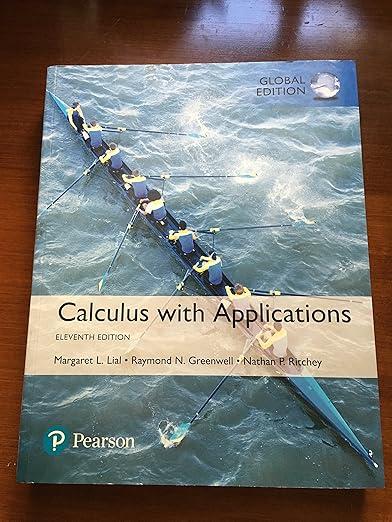
Calculus with Applications, Global Edition
د.إ380.00For freshman/sophomore, 2-semester (2-3 quarter) courses covering applied calculus for students in business, economics, social sciences, or life sciences.
-
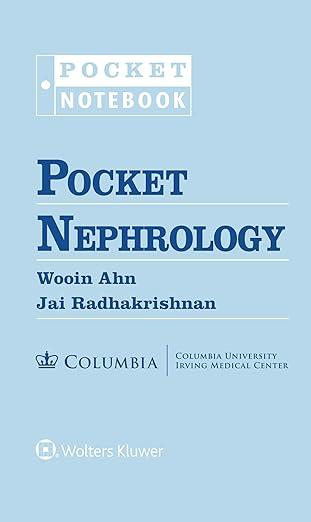
Pocket Nephrology
د.إ290.00Pocket Nephrology is a practical, high-yield reference offering current, evidence-based practices and expert guidance from physicians at the world-renowned Columbia University Medical Center. Featuring an easy-to-use loose-leaf format, it can be used as a portable diagnosis and treatment reference, as a quick dosage check, as a review for complex glomerular diseases and acid-base physiology, and for board preparation.- Mirrors the thought process of nephrologists in day-to-day practice.
- Contains the latest clinical guidelines and new therapeutic recommendations.
- Follows the popular Pocket Notebook format, featuring bulleted lists, tables, diagrams, and algorithms that make essential facts easy to find and retain.
- Covers all topics encountered in nephrology practice, categorized by subspecialties, making it ideal for trainees in nephrology as well as practicing nephrology consultants with years of experience.
- Written by current and former faculty members and fellows from Columbia University Medical Center.
Enrich Your Ebook Reading Experience
- Read directly on your preferred device(s), such as computer, tablet, or smartphone.
- Easily convert to audiobook, powering your content with natural language text-to-speech.
-
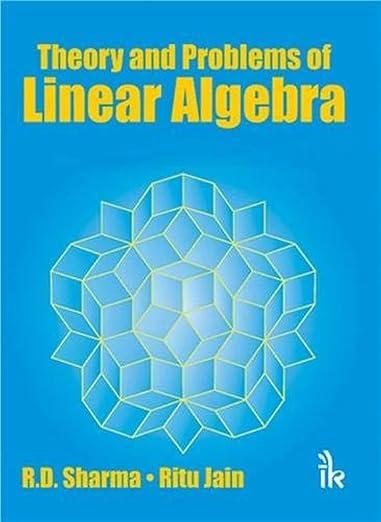
Theory and Problems of Linear Algebra
د.إ260.00Catera to the need of students studying Linear Algebra as a subject at undergraduate and postgraduate level. The book exhaustively covers the subject matter and its applications in various fields.
-
Mayo Clinic Antimicrobial Therapy: Quick Guide
د.إ170.00The medical management of infectious diseases and antimicrobial therapy can be a daunting task for health care professionals. Infectious diseases experts at Mayo Clinic provide a coordinated, unified approach to infectious disease treatment for the g
-
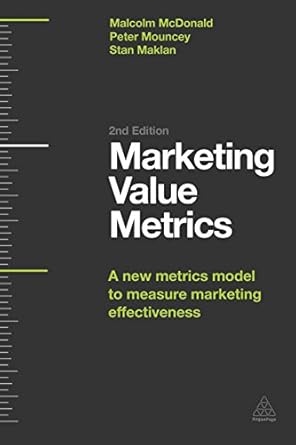
Marketing Value Metrics
د.إ160.00This second edition of Marketing Accountability, now transformed to Marketing Value Metrics, introduces and guides readers through a metrics model developed at the renowned Cranfield School of Management that not only shows how marketing systematically contributes to shareholder value, but also provides a metrics-based framework for developing and implementing marketing strategies that are measurable and accountable. Malcolm McDonald, Stan Maklan and Peter Mouncey introduce strategic marketing planning and then describe in detail the key steps in the modelling process as well as the procedures for applying it in practice. Updated throughout, this new edition includes the latest digital and social media metrics and advice on measuring the effectiveness of multichannel strategies. Marketing Value Metrics will enable marketing executives to measure more effectively the impact of marketing activity against organizational goals and will empower marketing teams and their managers to justify and defend their plans and strategies to their CEOs and CFOs.
-
Understanding Integrated Reporting: The Concise Guide to Thinking and Future of Corporate Reporting
د.إ150.00Integrated Reporting is the big new development in corporate reporting that everyone is talking about. Why? Quite simply, Integrated Reporting marks a paradigm shift in the way companies and other organizations think about business models and the creation of value. Integrated Reporting promotes long term thinking about value-creation and stewardship across a broad base of interdependent capitals – financial, manufactured, human, intellectual, natural, and social and relationship.With updated references and case studies to take account of the latest developments in Integrated Reporting, this book provides a practical and expert distillation of for IR professionals.Internationally renowned sustainability reporting expert and accountant Dr Carol Adams explains in simple terms what is and how to do it; how it links with other reporting frameworks and what it means in terms of thinking and processes. You’ll also get a clear business case for IR and insights and best practice examples from leading integrated reporters. Integrated Reporting is not just for companies.This book demonstrates how integrated thinking and IR can benefit many other organizations whose success and influence depends on relationships and partnerships.
-
Currency Wars II: The Power of Gold
د.إ140.00The structure of any human society is a typical pyramidal one, with a critical minority of people gradually moving up through the social structure due to their own intelligence and diligence, and in some cases through violence and fraud. When they have sufficient financial power and influence, they will in turn consolidate and expand their vested interests by changing the rules of the game and creating a ruling elite with interlocking interests. If the power pyramid structure of Eastern societies is based on regimes, the Western pyramid of domination is a chain of very hidden debts that hold the various strata of society firmly together. In Western societies, creditors have dominant power and debtors are in a dominated position, and the main function of the state apparatus is to protect and reinforce the reliability of this chain. In the West, whoever is the biggest creditor is the ultimate lawmaker of the game, and central banks, controlled by international bankers since the 19th century, are undoubtedly the biggest creditors of society as a whole, with the rest of society, including governments, being their debtors. From this perspective, the West today is actually a financial powerhouse controlling government decisions.
This book will comprehensively describe the formation, development, exclusion, conflict, alliance and checks and balances of the major financial power groups in Europe and the United States over a period of 300 years, systematically analyze the operation and decision-making mechanism of the dominant forces behind the scenes in the world today, and for the first time unveil the mystery of the “international banking family club” that rules the world.
-
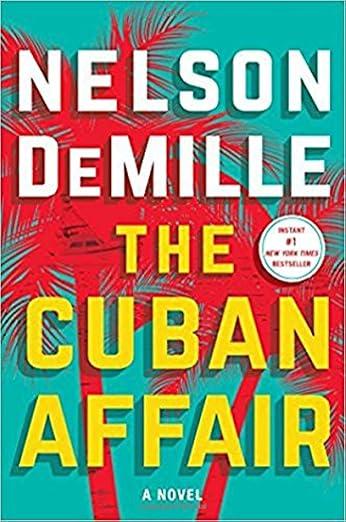
The Cuban Affair
د.إ140.00From the legendary #1 New York Times bestselling author of Plum Island and Night Fall, Nelson DeMille’s blistering new novel features an exciting new character–U.S. Army combat veteran Daniel “Mac” MacCormick, now a charter boat captain, who is about to set sail on his most dangerous cruise.
Daniel Graham MacCormick–Mac for short–seems to have a pretty good life. At age thirty-five he’s living in Key West, owner of a forty-two-foot charter fishing boat, The Maine. Mac served five years in the Army as an infantry officer with two tours in Afghanistan. He returned with the Silver Star, two Purple Hearts, scars that don’t tan, and a boat with a big bank loan. Truth be told, Mac’s finances are more than a little shaky.
-
The Beautiful Ones
د.إ120.00#1 NEW YORK TIMES BESTSELLER • The brilliant coming-of-age-and-into-superstardom story of one of the greatest artists of all time, in his own words―featuring never-before-seen photos, original scrapbooks and lyric sheets, and the exq
-
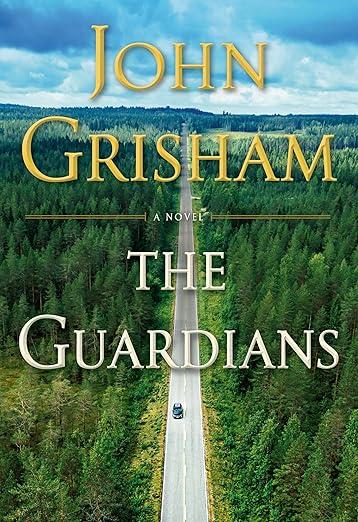
The Guardians
د.إ120.00#1 NEW YORK TIMES BEST SELLER • A classic legal thriller―with a twist. • “A suspenseful thriller mixed with powerful themes such as false incarceration, the death penalty and how the legal system shows prejudice.” ―Associated
-
Harry Styles: Fine Line
د.إ110.00(Piano/Vocal/Guitar Artist Songbook). This songbook is a matching folio to Styles’s second studio release that immediately rose to the top of the Billboard album charts. It features 12 songs arranged for piano and voice with guitar chord frames including full lyrics. Songs include: Adore You * Canyon Moon * Cherry * Falling * Fine Line * Golden * Lights Up * She * Sunflower, Vol. 6 * To Be So Lonely * Treat People with Kindness * Watermelon Sugar.
-
365 Aircraft You Must Fly
د.إ100.00A fascinating plane-by-plane journey through aviation history, this beautifully illustrated book covers 365 of the most iconic aircraft in world history that enthusiasts, serious-minded hobbyists, and casual fans would love to fly if given the chance. Clear photography, historical context, and specs get you as close as possible to these planes without setting foot in a hangar.
-
Numerology: Your Personal Guide
د.إ100.00All numbers have an intrinsic energy, from the date of your birth to the number of your home. With IN FOCUS NUMEROLOGY, author, Sasha Fenton, gives the information you need to understand the significance of numbers in your life, including how to use them to forecast outcomes and take advantage of opportunities. Beautiful illustrations and a frameable poster combined with expert information make this your go-to numerology guide. Topics covered include: · History of numerology · Predictive numerology · A daily oracle that combines the planets and numbers to give an accurate daily reading · An hourly oracle that is based on hours, days and planets · The Mystic Pyramid · The Oracle of Napoleon
-
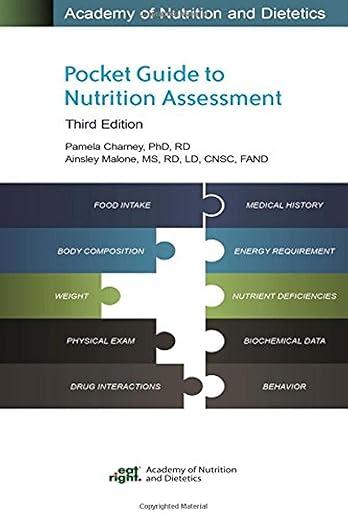
Academy of Nutrition and Dietetics Pocket Guide to Nutrition Assessment
د.إ90.00This edition is substantially revised, with a new chapter on the Nutrition Care Process, updated information on nutrition screening, thorough coverage of the five categories of nutrition assessment data, evidence-based guidance on estimating energy and nutrient requirements, additional anatomical illustrations and an expanded glossary.
-
The New Mcdougall Cookbook
د.إ85.00Three hundred meatless, dairyless, high-carbohydrate, and virtually fat-free recipes comprise this excellent new cookbook by the creators of the McDougall Program. Created and tested by Mary McDougall, these delicious dishes are adapted from a variet
-
-
How We Grow and Reproduce
د.إ80.00The Human Body in Focus concentrates on the different systems of the human body, explaining the physical process that allow us to live, eat, breathe, move, think and reproduce
-
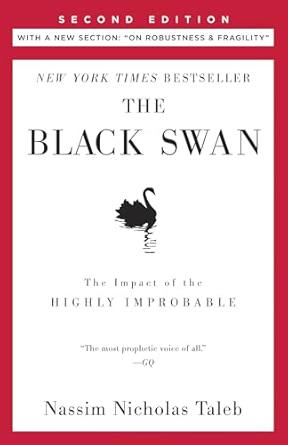
The Black Swan:
د.إ80.00The most influential book of the past seventy-five years: a groundbreaking exploration of everything we know about what we don’t know, now with a new section called “On Robustness and Fragility.”
A black swan is a highly improbable event with three principal characteristics: It is unpredictable; it carries a massive impact; and, after the fact, we concoct an explanation that makes it appear less random, and more predictable, than it was. The astonishing success of Google was a black swan; so was 9/11. For Nassim Nicholas Taleb, black swans underlie almost everything about our world, from the rise of religions to events in our own personal lives.
-
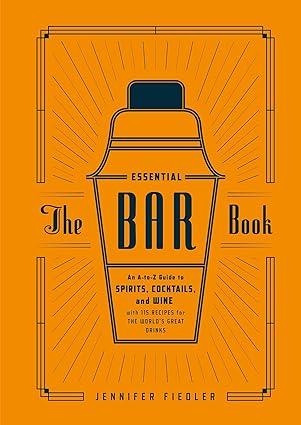
The Essential Bar Book
د.إ80.00The Essential Bar Book is full of indispensable information about everything boozy that’s good to drink. This easy-to-navigate A-to-Z guide covers it all, from the tools of the trade to the history and mythology behind classic and modern drinks, and features 115 recipes for the world’s most important cocktails.
-
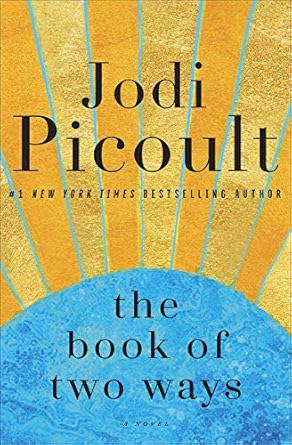
The Book of Two Ways
د.إ75.00Prologue My calendar is full of dead people.&160; When my phone alarm chimes, I fish it out from the pocket of my cargo pants. I’ve forgotten, with the time change, to turn off the reminder. I’m still groggy with sleep, but I open the date and read the names: Iris Vale. Eun Ae Kim. Alan Rosenfeldt. Marlon Jensen .&160; I close my eyes, and do what I do every day at this moment: I remember them.&160; Iris, who had died tiny and birdlike, had once driven a getaway car for a man she loved who’d robbed a bank. Eun Ae, who had been a doctor in Korea, but couldn’t practice in the United States. Alan had proudly showed me the urn he bought for his cremated remains and then joked, I haven’t tried it on yet . Marlon had changed out all the toilets in his house and put in new flooring and cleaned the gutters; he bought graduation gifts for his two children and hid them away. He took his twelve-year-old daughter to a hotel ballroom and waltzed with her while I filmed it on his phone, so that the day she got married there would be video of her dancing with her father.&160; At one point, they were my clients. Now, they’re my stories to keep.&160; Everyone in my row is asleep. I slip my phone back into my pocket and carefully crawl over the woman to my right without disturbing her—air traveler’s yoga—to make my way to the bathroom in the rear of the plane. There I blow my nose and look in the mirror. I’m at the age where that’s a surprise, where I still think I’m going to see a younger woman rather than the one who blinks back&160;at me. Lines fan from the corners of my eyes, like the creases of a familiar map. If I untangle the braid that lies over my left shoulder, these terrible fluorescent lights would pick up those first gray strands in my hair. I’m wearing baggy pants with an elastic waist, like every other sensible nearly-forty woman who knows she’s going to be on a plane for a long-haul flight. I grab a handful of tissues and open the door, intent on heading back to my seat, but the little galley area is packed with flight attendants. They are knotted together like a frown.&160; They stop talking when I appear. “Ma’am,” one of them says, “could you please take your seat?”&160;It strikes me that their job isn’t really very different from mine. If you’re on a plane, you’re not where you started, and you’re not where you’re going. You’re caught in between. A flight attendant is the guide who helps you navigate that passage smoothly. As a death doula, I do the same thing, but the journey is from life to death, and at the end, you don’t disembark with two hundred other travelers. You go alone.&160;I climb back over the sleeping woman in the aisle seat and buckle my seatbelt just as the overhead lights blaze and the cabin comes alive.&160;“Ladies and gentlemen,” a voice announces, “we have just been informed by the captain that we’re going to have a planned emergency. Please listen to the flight attendants and follow their directions.”&160;I am frozen. Planned emergency . The oxymoron sticks in my mind.&160;There is a quick rush of sound—shock rolls through the cabin—but no screams, no loud cries. Even the baby behind me, who shrieked for the first two hours of the flight, is silent. “We’re crashing,” the woman on the aisle whispers. “Oh my God, we’re crashing.”She must be wrong; there hasn’t even been turbulence. Everything has been normal. But then the flight attendants station themselves in the aisles, performing a strange, staccato ballet of safety movements as instructions are read over the speakers. Fasten your&160; seatbelts. When you hear the word brace, assume the brace position. After the plane comes to a complete stop you’ll hear Release your seatbelts . Get out. Leave everything behind. Leave everything behind.&160; For someone who makes a living through death, I haven’t given a lot of thought to my own.&160;I have heard that when you are about to die, your life flashes before your eyes.&160;But I do not picture my husband, Brian, his sweater streaked with inevitable chalk dust from the old-school blackboards in his physics lab. Or Meret, as a little girl, asking me to check for monsters under the bed. I do not envision my mother, not like she was at the end or before that, when Kieran and I were young.&160;Instead, I see him.&160; As clearly as if it were yesterday, I imagine Wyatt in the middle of the Egyptian desert, the sun beating down on his hat, his neck ringed with dirt from the constant wind, his teeth a flash of lightning. A man who hasn’t been part of my life for fifteen years. A place I left behind.&160;A dissertation I never finished.&160;Ancient Egyptians believed that to get to the afterlife, they had to be deemed innocent in the Judgment Hall. Their hearts were weighed against the feather of Ma’at, of truth.&160;I am not so sure my heart will pass.&160;The woman to my right is softly praying in Spanish. I fumble for my phone, thinking to turn it on, to send a message, even though I know there is no signal, but I can’t seem to open the button on my pants pocket. A hand catches mine and squeezes.I look down at our fists, squeezed so tight a secret couldn’t slip between our palms. Brace , the flight attendants yell. Brace!&160; As we fall out of the sky, I wonder who will remember me. Much later I would learn that when a plane crashes and the emergency personnel show up, the flight attendants tell them how many&160;souls were on board. Souls, not people. As if they know our bodies are only passing through for a little while.&160; I would learn that one of the fuel filters became clogged midflight. That the second filter-clogging light came on in the cockpit forty-five minutes out, and in spite of what the pilots tried, they could not clear it, and they realized they’d have to do a land evacuation. I would learn that the plane came in short of Raleigh-Durham, sticking down in the football field of a private school. As it hit the bleachers with a wing, the plane tipped, rolled, broke into pieces.&160;Much later I would learn of the family with the baby behind me, whose row of three seats separated from the floor and was thrown from the aircraft, killing them instantaneously. I would hear about the six others who had been crushed as the metal buckled; the flight attendant who never came out of her coma. I would read the names of the passengers in the last ten rows who hadn’t gotten out of the broken fuselage before it erupted in flame.&160;I would learn that I was one of thirty-six people who walked away from the crash.&160;When I step out of the examination room of the hospital we’ve been taken to, I’m dazed. A woman in a uniform is in the hallway, talking to a man with a bandaged arm. She is part of an emergency response team from the airline that has overseen medical checks by physicians, given us clean clothes and food, and flown in frantic family members.&160;“Ms. Edelstein?” she says, and I blink, until I realize she is talking to me.&160;A million years ago, I had been Dawn McDowell. I’d published under that name. But my passport and license read Edelstein. Like Brian’s.&160;In her hand she has a checklist of crash survivors.&160;She puts a tick next to my name. “Have you been seen by a doctor?”&160;“Not yet.” I glance back at the examination room.&160;“Okay. I’m sure you have some questions . . . ?”&160;That’s an understatement.&160; Why am I alive, when others aren’t? Why did I book this particular flight? What if I’d been detained checking in, and had missed it? What if I’d made any of a thousand other choices that would have led&160;me far away from this crash? At that, I think of Brian, and his theory of the multiverse. Somewhere, in a parallel timeline, there is another me at my own funeral. At the same time, I think—again, always—of Wyatt. I have to get out of here. I don’t realize I have said this out loud until the airline representative responds. “Once we get the doctor’s paperwork, you’re clear to leave. Is someone coming for you, or do you need us to make travel arrangements?”We, the lucky ones, have been told we can have a plane ticket anywhere we need to go—to our destination, back to where the flight originated, even somewhere else, if necessary. I have already called my husband. Brian offered to come get me, but I told him not to. I didn’t say why. I clear my throat. “I have to book a flight,” I say.“Absolutely.” The woman nods. “Where do you need to go?” Boston, I think. Home. But there’s something about the way she phrases the question: need, instead of want; and another destination rises like steam in my mind.I open my mouth, and I answer. -
Things My Children Think I’m Wrong About
د.إ70.00‘Memorable, musical, witty and just brilliant in every way. Nic is hands down the best new poet to emerge in the last 20 years.‘ – Sophie Hannah
Perfect for sharing and demanding to be read aloud, this funny, pithy, highly relatable collection of small but perfectly formed poems provides the antidote to the manifold frustrations and absurdities of adult life. A verse companion to modern parenthood, it is the ideal gift for any mother or father whose children know they are wrong about everything.
-
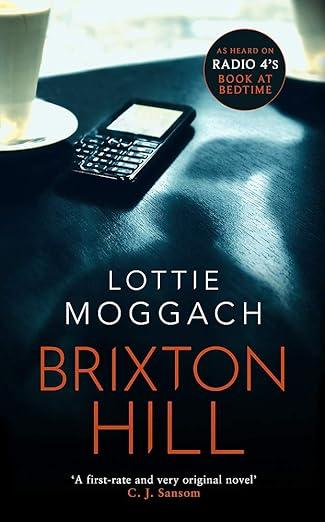
Brixton Hill
د.إ70.00‘Brixton Hill shares the confident sheen of its predecessors and offers [Moggach’s] most accomplished plot yet . . . And, like all the best storytellers, Moggach knows how to choreograph an ending’ – the Observer
As Rob reaches the end of a seven year stretch inside, he winds up in an open prison in Brixton. Each morning, he exits the prison gates and begins the short walk to a local charity shop, where he spends the day in the backroom sorting through other people’s discarded belongings. All he needs to do is keep his nose out of trouble and in just a few months’ time, he’ll be out for good.
-
The New Silk Road: How a Rising Arab World is Turning Away from the West and Rediscovering China
د.إ70.00The rise of the Arab world and China are part of the same story, once trading partners via the Silk Road. It isn’t a coincidence that Arab traders have returned to China at the same time that China is fast regaining its share of the global economy. This is a breakthrough account of how China is spurring growth in the Arab world.
-
The Football Encyclopedia
د.إ70.00The Kingfisher Football Encyclopedia has a brand-new look to tie in with the 2022 FIFA World Cup Qatar, which promises to be the biggest football tournament in history. What’s […]
-
Billy Sure Kid Entrepreneur and the No-Trouble Bubble
د.إ65.00Billy Sure, twelve-year-old inventor and CEO of Sure Things, Inc., hosts a competition to find the Next Big Thing in the fifth book of a hilarious middle grade series!
Everyone is talking about Billy Sure, the twelve-year-old genius and
-
JOAN DIDION Where I Was from
د.إ65.00From the bestselling, award-winning author of The Year of Magical Thinking and Notes to John: In this “arresting amalgam of memoir and historical timeline” (The Baltimore Sun), Didion―a native Californian―reassesses parts of h
-
Destination Wedding
د.إ60.00JFK Airport: Their Flight Is Delayed Due to Technical Reasons and Everyone Is Secretly Wishing Airlines Didn’t Announce That and Make All the Passengers Nervous“I cannot believe my mother is here with her boyfriend and I’m here alone,” Tina Das said to her best friend, Marianne Laing, in the British Airways business-class lounge at JFK. Tina, in the hope that she would be able to sleep through the first leg of the flight to Heathrow, had rimless glasses on instead of her usual contacts. She never needed much makeup thanks to her thick eyebrows, which had been a liability when she was younger but were very fashionable now and gave her face all the drama it needed. She was wearing black North Face sweatpants that cinched at the ankle, a gray, long-sleeved T-shirt, and black-and-white Adidas sneakers. It was hot in the lounge so her Guess fur vest was hanging off the chair behind her.
A bowl full of nuts was on the table in between them. Tina picked up a handful while staring out of the window and tossed them all into her mouth and started chewing before she realized she had eaten several whole pistachios, with shells. The hard, cracked pieces pierced her mouth and she spat them out. A grumpy old man appeared out of nowhere with a broom and shook his head at her as he swept up the pistachio shells.
“I didn’t know they had shells,” Tina said apologetically.
The man said nothing but kept looking at her as he swept, his broom knocking her foot aside.
“It isn’t my fault,” Tina said to him again but he didn’t respond.
The man walked away and Tina turned to Marianne and said, “At the price of these tickets, the nuts really shouldn’t have shells.”
Marianne was applying lip balm and laughing. She was so good at putting on makeup that it was hard to say whether or not she had any on, but the smattering of brown freckles across her nose was visible and, despite the fact that it was November, still had a velvety brownness they usually acquired over the summer because she had recently been to San Francisco for Tom’s college roommate’s wedding. Marianne was wearing similar sweatpants and a plain black long-sleeved T-shirt, and a red shawl was draped over the back of her chair.
“We’re like world-weary businesswomen who travel internationally twice a month and are just so over it,” Marianne said. “I feel like I should be impatiently clacking away on a laptop but I have no work to do this week and I bet Tom’s fast asleep.”
Marianne looked down at her phone and the itinerary that had been sent by the wedding planner.
“It feels like we’re going to have a lot of free time,” Marianne said. “There aren’t that many events listed here. I thought Indian weddings had days and days of events.”
“I think these days most people just pick and choose what parts they want to do. Shefali wanted to walk down the aisle in a white dress but my aunt put her foot down and said she could pick and choose what she wanted but she couldn’t change religions,” Tina said. “We’ll have time to explore the city, though.”
Marianne nodded as she cracked open a pistachio and ate it and played with the shells in one hand.
Their flight was two hours late so they were on glass number three of champagne and plate number two of mini sandwiches. Even on Tina’s decent income, these business-class tickets were prohibitively expensive. She had managed to book an economy flight using her own money and then used her miles to upgrade herself. Tina was the vice president of development for Pixl, a streaming network for which she sought video content, a term she hated but a job that paid her enough to live alone in a two-bedroom apartment overlooking McCarren Park in Williamsburg, Brooklyn. Her work was frustrating—ideas forever on the brink of becoming television shows but nothing concrete yet, nothing complete, nothing finished. Her enthusiasm for projects always waned as more people got involved and ideas gradually got altered and then shut down altogether.
At Pixl, Tina was in charge of finding content from India so she had been back a few times over the past five years. But it was always to either Delhi or Bombay, where she stayed at a Taj Hotel, took a car and driver everywhere, and partied with producers from all over in rooftop bars and seaside clubs that could have been anywhere in the world. And then she returned to New York City without having seen much of actual India.
Tina Das was conceived in India but born, nine months later, in Columbus, Ohio. Three months later, like her father, she held a coveted American passport. Her mother stubbornly held on to her Indian passport and Green Card. For the first eight years of her life, her parents took her to India every summer and they stayed with her aunt and uncle, the parents of Shefali, the bride, in New Delhi. In the eighth summer, her father got malaria and spent two weeks in Holy Family Hospital and decided, on the flight back, that he didn’t want to return to India next year.
“Let’s go to London next summer instead,” Tina remembered him saying on the flight back that year. He had lost weight and his belt was looped tightly around, his pants bunching at the waist. Back in Ohio, he bought new pants, without pleats, Tina had noticed, and the following summer they went to London, then they went to Ubud, then Stockholm, then Buenos Aires, then Tokyo, and even Colombo the year before Tina left for Yale, but never back to India. Her mother went once when her mother died in Calcutta, but that was all before the divorce.
Last year, Tina had come tantalizingly close to green lighting a reality show that would have featured the best musical talent from around Asia and put them together with a Bollywood music producer to create a band. She had found a K-pop singer from Seoul, a dancer from Ho Chi Minh City, two beatboxing brothers from Sri Lanka, a drummer from Dharavi, the Bombay slum, and a female spoken-word artist from Lahore, but the project fizzled, and Tina had gone home frustrated and depressed and worried about her career. She was still upset that it hadn’t moved forward and now all except Sid, the drummer, were committed to other projects. The K-pop singer had joined a reality television show in Singapore as a judge, the two beatboxing brothers had moved to Berlin, the spoken word artist was seven months pregnant and focusing on fashion design, and the dancer from Vietnam was performing with a cruise line in Halong Bay.
Tina felt bad about having let Sid down. Sid, with his easy confidence and priceless bright smile. Sid, who was tall and slim and had a rough beard and laughed easily during the audition and wore his pants baggy and who, back in New York, Tina thought about often—what his life was like in India, who his friends were, who his family was. He was immensely attractive—his confidence, his swagger, his inaccessibility—and he often crossed her mind. After his audition, he had lifted his shirt to wipe the sweat off his face and revealed a perfect set of abs and dark hair trailing into his boxers. Tina had shaken her head, laughed, and called a lunch break.
He had stayed in touch with her and checked in often to see if the show might get back on track and she never had any good news to give him. He had started working part-time as a personal trainer to make money while working on his music. But Tina knew that personal training was just enough money to survive, whereas the show would have allowed him to move his mother out of their slum and into a concrete apartment, and she felt awful that she had let him down. Honestly, he’d said “slum,” but she wasn’t quite sure what he’d meant. Was it one room in a slum? Was a slum by definition a room? A shack? She had marveled at the sheer size of the blue-tarp-covered expanses of Dharavi she had flown over while landing in Bombay, but she couldn’t actually visualize the homes within it. She didn’t know how to ask and she didn’t want to show up at his doorstep with a camera, even though that would obviously make for good television. Maybe this was why she was struggling to get her projects off the ground—reality television often felt too invasive for her.
When she told Sid she was going to be in Delhi for a week, he had immediately said he would come from Bombay to see her “just to touch base.” Tina was dreading seeing him on this trip, dreading looking into his handsome, eager eyes and telling him that there was still no show and no other talent. It was easy to feed Sid fake hope over email but she knew she would have to tell him the truth this week. She would put him in touch with everyone she knew in Bombay in case they wanted to hire a personal trainer, she decided; it was the least she could do for him.
Since she was meeting Sid, Tina could have tried to expense this trip as well but her boss, Rachel Sanders, knew the bride and knew Tina would not be doing any work. But maybe it was time to talk to Rachel about booking her business class for all her future work trips. Sheryl Sandberg said she should lean in, after all. Not that Tina had read the book but really the title told her everything she needed to know. Was Sheryl Sandberg still an appropriate role model or was that over now, Tina wondered. It was hard to keep up sometimes.
-
The Devils of Cardona
د.إ60.00“A thrilling quest for justice… [A] novel that is as exciting as it is enlightening from its first pages to its satisfying end.” ―The New York Times Book Review
“A page-turner in the proper sense… Mr. Carr has written a gripping